
AI and Robotics have witnessed significant advancements in recent years, driven by breakthroughs in machine learning, computer vision, natural language processing, and hardware capabilities.

 in Healthcare
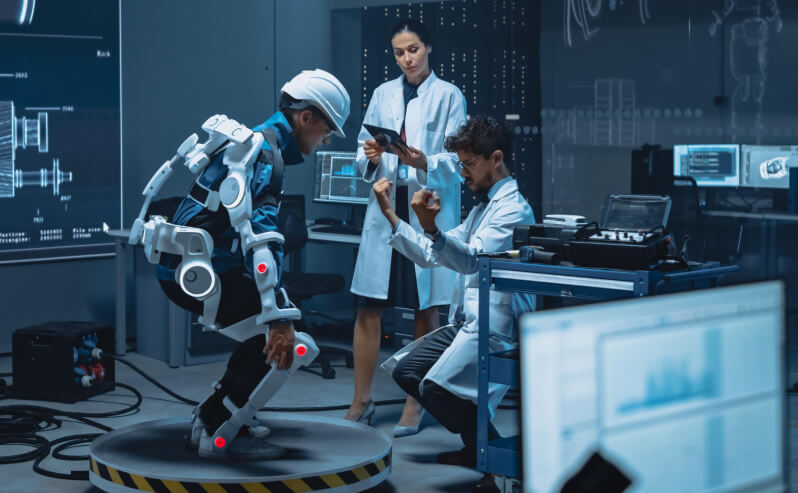


Recent advancements in AI and robotics have been propelled by breakthroughs in machine learning, computer vision, natural language processing, and hardware innovations, revolutionizing industries and creating new opportunities for efficiency and automation.

AI involves creating algorithms, models, and systems that allow machines to replicate human intelligence and behavior. It spans several key areas, including machine learning, natural language processing, computer vision, and expert systems. AI systems can analyze data, recognize patterns, make informed decisions, and continuously improve their performance.
AI is transforming various industries, with applications in healthcare, finance, transportation, manufacturing, and entertainment, driving innovation and efficiency across these sectors.
Explore More








AI involves the development of algorithms, models, and systems that enable machines to mimic human intelligence and behavior.

Developing custom machine learning models and algorithms to enable automation, pattern recognition, and predictive analytics.
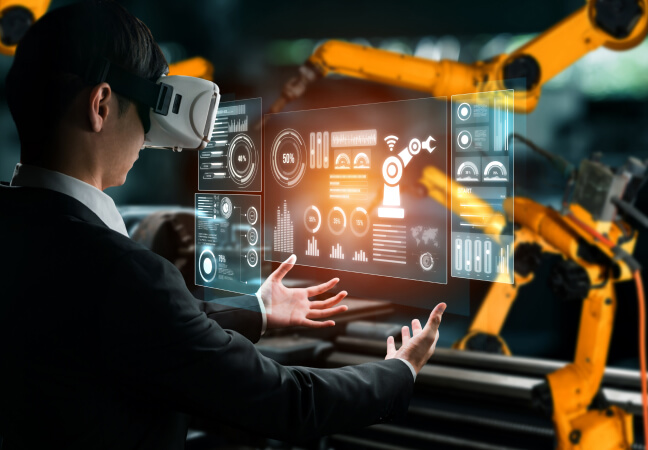
Explore MoreImplementing software robots to automate repetitive and rule-based tasks, improving efficiency and accuracy.
Explore MoreCreating intelligent chatbot systems or virtual assistants that can understand and respond to user queries, improving customer service and support.
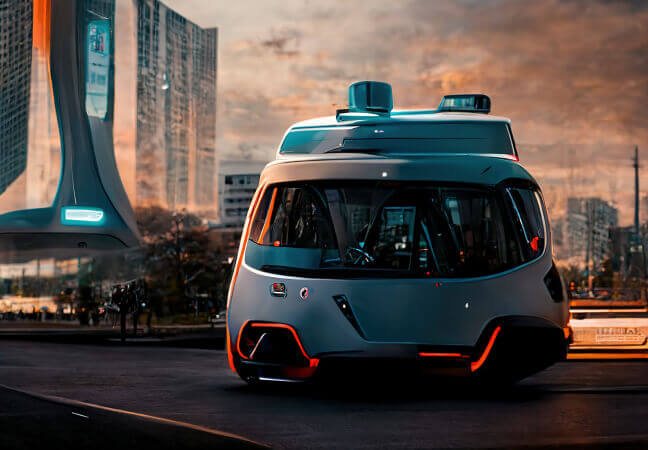
Explore MoreDesigning and developing autonomous robots or vehicles capable of intelligent decision-making and navigation.
Explore More
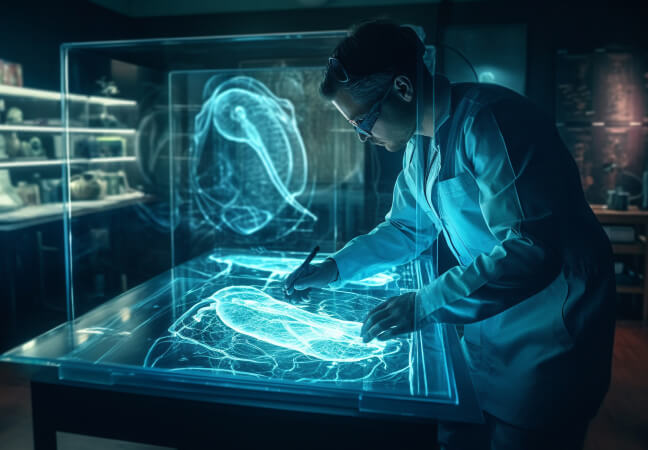
Real-time monitoring uses AI-driven technology to continuously track vital signs and health metrics, providing immediate alerts and enabling prompt action to ensure patient safety and well-being.
Clinical Decision Support leverages AI to analyze patient data and provide healthcare professionals with evidence-based recommendations, helping to make informed decisions and improve patient outcomes.
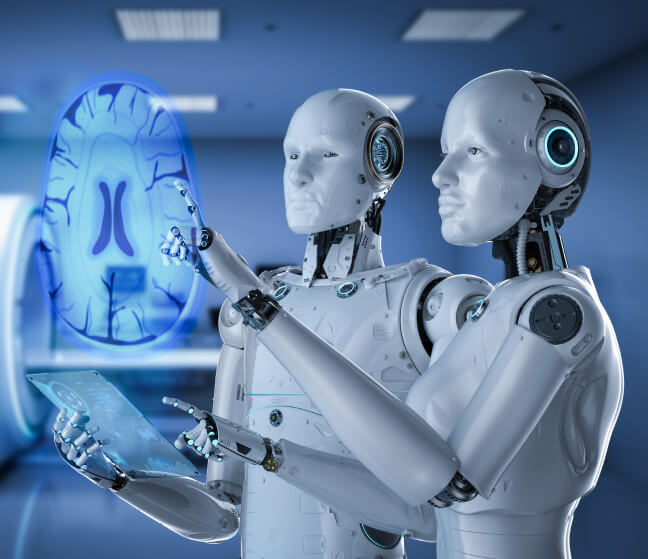
Here are a few AI and Robotics case studies that showcase the practical applications and benefits of these technologies

Implementing AI-powered health monitoring has been a game-changer for our elderly care facility. The real-time alerts and predictive analytics have significantly improved our ability to respond quickly to health changes, ensuring the safety and well-being of our residents. Our staff is more efficient, and our residents are receiving better, more personalized care

The Clinical Decision Support system has transformed the way we approach patient care. The AI-driven insights have not only improved the accuracy of our diagnoses but have also helped our doctors make faster, more informed decisions, reducing wait times and improving patient outcomes.

As a family caregiver, I’ve seen firsthand how AI solutions have improved my mother’s health. The AI-based health monitoring system keeps me updated in real-time, and the virtual health assistant reminds her to take her medication. It’s been a huge relief, knowing that she’s receiving constant support, even when I’m not there

We’ve seen a marked improvement in operational efficiency since adopting AI tools in our hospital. The time saved on routine tasks allows our medical staff to focus more on patient care, and the predictive analytics have helped us prevent potential emergencies, making our hospital a safer place for all.

The AI-powered system has truly revolutionized how we manage patient care. With real-time monitoring, we can quickly detect any changes in our patients’ conditions, which allows us to take action immediately. This has significantly reduced emergency incidents and improved our overall patient satisfaction.
Integrating AI into our practice has made a world of difference. The clinical decision support system provides our team with accurate, evidence-based recommendations, which enhances the quality of care we deliver. It’s like having an extra layer of expertise to guide us through complex cases.
As a caregiver for my elderly father, the AI system has been a huge help in managing his health remotely. The virtual assistant reminds him to stay on track with his medications and doctor appointments, while I receive real-time updates. It has greatly reduced my worries and made caregiving more manageable
The AI solutions we’ve implemented in our clinic have dramatically improved efficiency. From reducing administrative workload to enhancing patient care with personalized insights, these tools have allowed us to focus on what matters most: providing better care to our patients.
In healthcare, surgical robots assist with precise surgeries, AI helps analyze medical images, and robots provide support for elderly people with daily tasks. In manufacturing, robots automate processes like assembly, packaging, and quality control, while AI predicts when maintenance is needed. Autonomous vehicles and AI-driven traffic management systems improve safety and efficiency in transportation. In logistics, warehouse robots streamline sorting and packing, and autonomous robots handle last-mile deliveries. In agriculture, AI and robots optimize farming practices and automate harvesting. In retail, automated checkouts and robots help manage inventory efficiently. AI and robotics enhance productivity, precision, and safety across industries
Artificial Intelligence (AI) refers to the ability of machines to perform tasks that typically require human intelligence, such as learning, reasoning, problem-solving, and decision-making. AI systems use algorithms and data to mimic human cognition, enabling machines to recognize patterns, process natural language, and make decisions. AI is used in various applications, including healthcare, finance, transportation, and customer service, to improve efficiency, accuracy, and automation.
Robotics is the branch of technology that involves the design, creation, and use of robots to perform tasks. Robots are machines that can be programmed to carry out specific actions, either autonomously or with human guidance. They are used in various industries, including manufacturing, healthcare, and logistics, to automate processes, improve precision, and reduce human effort. Robotics combines elements of engineering, computer science, and AI to create machines that can assist or replace humans in various tasks.
AI (Artificial Intelligence) is the technology that enables machines to simulate human intelligence, such as learning, problem-solving, and decision-making. Robotics, on the other hand, involves the design and creation of robots—machines that can carry out tasks either autonomously or with human guidance. While AI is the brain that allows a system to think and make decisions, robotics is the body that performs physical actions. In many cases, AI is used to power robots, enabling them to perform tasks with greater autonomy and adaptability.
Narrow AI (Weak AI) - Designed to perform a specific task such as facial recognition or language translation. It operates within a limited range and cannot perform tasks outside of its programming General AI (Strong AI) - A more advanced form of AI that can understand, learn, and apply knowledge across different tasks, similar to human intelligence. This type of AI is still theoretical and doesn't yet exist Superintelligent AI - Refers to a level of AI that surpasses human intelligence in every aspect including problem-solving, creativity, and decision-making. This type of AI remains speculative and is a subject of ongoing research



Copyright Aoriv.io All Rights Reserved